Washington's "shows of force" ultimately reveal its own "anxiety before a Latin America that no longer responds obediently to its designs," said Luis Ernesto Martinez, a Venezuelan social sciences professor.
by Xinhua writers Tan Huiting, Tian Rui
MEXICO CITY, Oct. 19 (Xinhua) -- Outrage has swept across Latin America after U.S. President Donald Trump confirmed that he had authorized the CIA to carry out covert operations in Venezuela.
Trump's confirmation on Wednesday came shortly after The New York Times reported the classified directive, saying the administration aims to remove the Venezuelan president from power, further straining Washington's ties with the region.
OPERATIONS UNDER PRETEXT OF "WAR ON DRUGS"
The unusual acknowledgement of the U.S. spy agency's secret operations followed a string of U.S. military strikes in recent weeks targeting alleged drug-smuggling boats in the Caribbean.
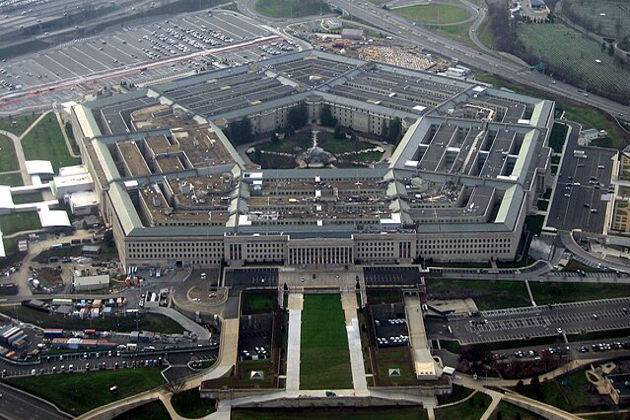
The Pentagon has deployed eight warships, a nuclear-powered submarine and more than 6,500 troops to the Caribbean in what the White House claims is aimed at cracking down on drug smuggling.
Since early September, at least five deadly strikes have targeted small vessels that Trump said "intelligence" confirmed were involved in narcotics trafficking, killing 27 people.
"Every boat that we knock out, we save 25,000 American lives," Trump said at Wednesday's press conference. "We are certainly looking at land now, because we've got the sea very well under control."
Critics denounced the operations as "extrajudicial killings" that violated both U.S. and international law, with the French daily Le Monde warning that the United States' unilateral strikes, conducted without Congress's approval, "could amount to regime change in disguise."
Meanwhile, disputes also arose inside the Pentagon over the strikes' legality, leading to the early retirement of Alvin Holsey, the admiral overseeing all U.S. military activity in the Caribbean and South America, who reportedly opposed further escalation.
The end goal, American officials have said privately, is to remove Venezuelan President Nicolas Maduro from power, The New York Times reported recently. "The United States has offered 50 million U.S. dollars for information leading to Mr. Maduro's arrest and conviction on U.S. drug trafficking charges," it said.
Maduro said the United States "is not waging a war on drugs, but a war for control of Venezuela's oil and sovereignty," denouncing the U.S. operations as a new form of colonial aggression.
LATIN AMERICA UNITED AGAINST INTERVENTION
Trump's announcement has prompted Latin American leaders to a collective defense of national sovereignty.
The Bolivarian Alliance for the Peoples of Our America-People's Trade Treaty, grouping Latin American and Caribbean countries like Cuba, Venezuela and Bolivia, released a communique on Thursday, calling the CIA operations "a direct violation of the principle of sovereignty, as well as a threat to International Law and the Charter of the United Nations."
"There will be no room for war or interventionism in Our America," it noted, adding that the region will always be "a land of peace, dignity, and resistance."
Cuban President Miguel Diaz-Canel on Friday expressed the country's solidarity with Venezuela on X. "In moments when the empire and its misguided leader approve covert CIA operations against Venezuela, we express our solidarity with that brother people and, especially, with its President Nicolas Maduro," he said.
Brazilian President Luiz Inacio Lula da Silva said Thursday that "no president from another country has the right to decide Venezuela's fate."
On the same day, the Workers' Party in Brazil condemned the U.S. move as "an affront to sovereignty and a violation of international law," noting that the CIA "has a long history of illegal and destabilizing operations in South America, marked by coups, repression and bloody dictatorships."
Similarly, Bolivian President Luis Arce called the CIA operations "a clear act of intimidation," warning that "a military escalation could endanger peace and stability across Latin America and the Caribbean."
Luis Ernesto Martinez, a Venezuelan social sciences professor, told Xinhua that Washington remains anchored in a unilateral view of power, unable to accept that Latin America is no longer its backyard.
"It is a warning to the entire region, a reminder that Washington remains willing to use military power as an instrument of foreign policy," he said.
NEW PRETEXT, OLD SCHEME
The authority to allow the CIA to carry out lethal operations in Venezuela and the broader Caribbean region has revived global debate over the CIA's long and controversial record in Latin America, marked by covert interventions, assassinations and support for coups throughout the 20th century.
Luis Ricardo Delgado, professor of Social Sciences at Venezuela's University of Carabobo, recalled that the CIA's covert operations in Latin America are "nothing new," and in Venezuela's case, they have been "particularly active since 1999."
For the United States, Latin America has always been regarded as its "exclusive sphere of influence," he added. "Therefore, interventionism has always been justified in pursuit of its geostrategic and geoeconomic agendas."
The professor also argued that the CIA's presence in Venezuela is "an updated reissue of the Monroe Doctrine under new pretexts."
He added that whether framed as the "defense of democracy" or the "fight against drug trafficking," such efforts share the same goal of maintaining political and economic control over countries in the region, especially those challenging U.S. hegemony -- a constant for decades, regardless of which party holds power in Washington.
Delgado urged Latin America to reaffirm its political and economic independence through solid integration mechanisms to overcome the "tutelage" that Washington seeks to maintain over the continent.
Analysts warn the tension could escalate. With U.S. naval forces stationed off Venezuelan waters, regional militaries on alert, and communication between the United States and Venezuela largely frozen, even a minor incident at sea could spark a wider conflict.
Across Latin America, the prevailing view is that regional issues should be resolved through dialogue and mutual respect, rather than through force or covert operations.
Washington's "shows of force" ultimately reveal its own "anxiety before a Latin America that no longer responds obediently to its designs," said Martinez, the Venezuelan social sciences professor.



 Share
Share
 Tweet
Tweet
 Share
Share
 Flip
Flip
 Email
Email