Xinhua
01 Apr 2026, 20:15 GMT+10
"Cuba, in the eyes of Donald Trump and (U.S. Secretary of State) Marco Rubio, was initially underestimated," said Luis Rene Fernandez Tabio, professor at the International Economic Research Center at the University of Havana. "However, as time passed, it became clear that the Trump narrative did not match reality. Cuba does not submit to the United States, even amid the crisis worsened by fuel shortages."
HAVANA, April 1 (Xinhua) -- The Russian Transport Ministry said Monday that the tanker Anatoly Kolodkin had delivered about 100,000 tons of crude oil to Cuba in humanitarian aid.
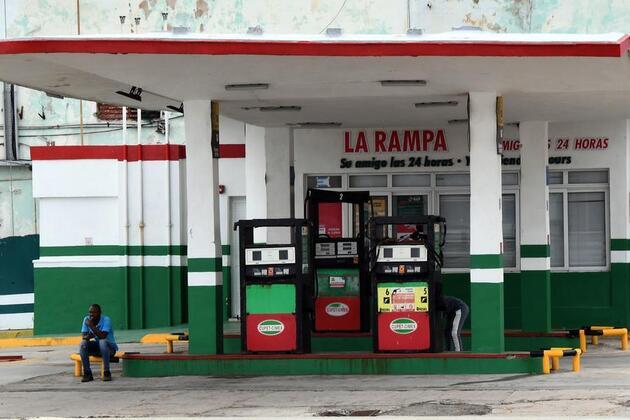
Washington allowed the shipment for "humanitarian reasons," according to White House spokesperson Karoline Leavitt, as the Caribbean country struggles with severe shortages under the U.S. total oil blockade.
Why is oil shipment important for the Cuban society? What does Washington's loosening oil blockade mean?
IN-TIME SHIPMENT
Cuba's Energy and Mines Minister Vicente de la O Levy on Tuesday thanked Russia for the "valuable shipment that arrives amidst the complex energy situation we are facing."
Cuba produces barely 40 percent of its fuel needs and relies heavily on imports to sustain its energy grid. Its domestic crude is heavy and difficult to refine into diesel and other light products with its aging, limited-capacity refineries.
Experts estimated that Russia's shipment could yield roughly 180,000 barrels of diesel, enough to meet Cuba's daily demand for nine or ten days.
Russia would continue working on oil supplies to Cuba, Kremlin spokesperson Dmitry Peskov said Monday, describing it as a responsibility to provide necessary assistance to Cuba under the current circumstances.
Under the U.S. blockade, Cuba is enduring one of its worst economic crises since the 1990s. The country has already experienced three nationwide blackouts in March. The lack of gasoline and basic resources has crippled hospitals, slashed public transport, and strained almost every essential service.
The shortages have also affected the water supply. More than 80 percent of the Cuban people depend on the water system linked to the national electric power system, Antonio Rodriguez, president of Cuba's National Institute of Hydraulic Resources, said Thursday.
Living conditions have deteriorated significantly, with frequent and prolonged power outages, transportation and mobility problems, and mounting pressure on public services, Claudia Marin Suarez, associate researcher and coordinator of the Latin America and Caribbean team at the Center for International Policy Research, told Xinhua.
A POLICY SHIFT?
Since January, the Trump administration has imposed a new round of oil restrictions on Cuba and has repeatedly issued military threats. The forcible seizure of Venezuelan President Nicolas Maduro on Jan. 3 severely disrupted Cuba's oil supplies from Venezuela. Cuba also lost its oil supply from other providers, including Mexico, after Washington threatened additional tariffs.
It remains unclear why the administration chose not to intercept the Russian tanker. Decisions "are being made on a case-by-case basis," White House spokesperson Karoline Leavitt said on Monday, insisting that "there has not been a formal change in sanction policy."
"If a country wants to send some oil into Cuba right now, I have no problem whether it's Russia or not," U.S. President Donald Trump said on Sunday night, while reiterating that Cuba is "next" after the military operation against Iran.
Cuba is in negotiations with the United States to address bilateral differences, with talks currently in their initial stages, said President Miguel Diaz-Canel on March 13 in a video broadcast on national television.
Cuba's Charge d'Affaires to the United States Lianys Torres Rivera indicated on Tuesday that Havana is willing to pursue economic reform and expand business ties with the United States.
"There's a huge ... range of issues that we can discuss with the U.S. that are, we're pretty sure, for the benefit of the national interests of the U.S. and the national interest of Cuba," she said in an interview with USA Today.
Michael Bustamante, chair in Cuban and Cuban-American Studies at the University of Miami, described the Trump administration's approach as seeming "very, very unpredictable," according to the U.S. think-tank Council on Foreign Relations (CFR).
HIDDEN MOTIVES
Senior U.S. officials have indicated that the ultimate goal of Trump's hard-line policies and sanctions is to bring about reforms in Cuba, including a potential leadership change, media reports said.
However, experts doubt the likelihood of a Venezuela-style military intervention in Cuba, particularly as the United States remains engaged in a widening conflict with Iran. "This is no Venezuela," said Will Freeman, CFR fellow for Latin American Studies. "Cuba's outlook is at best highly uncertain."
Analysts say recent U.S. flexibility may be tactical. Domestic political pressures and the costs of the conflict with Iran may have prompted Washington to ease sanctions, at least temporarily, Luis Rene Fernandez Tabio, professor at the International Economic Research Center at the University of Havana, told Xinhua.
"I consider that the orientation of U.S. policy has not changed, nor can we expect it to modify in the short term the combination of instruments it uses to achieve its objectives, whether through force or the so-called 'soft power' tools," he added.
"Cuba, in the eyes of Donald Trump and (U.S. Secretary of State) Marco Rubio, was initially underestimated," said Tabio. "However, as time passed, it became clear that the Trump narrative did not match reality. Cuba does not submit to the United States, even amid the crisis worsened by fuel shortages."
Suarez noted that sanctions reflect Washington's broader effort to maintain dominance and control in the Western Hemisphere, particularly in the Caribbean.
"Instead of competing by offering better development opportunities, the U.S. response has been to intensify pressure through unilateral coercive measures," she noted. "These measures are becoming more pronounced in the Western Hemisphere, especially in the Caribbean."
Get a daily dose of South America Times news through our daily email, its complimentary and keeps you fully up to date with world and business news as well.
Publish news of your business, community or sports group, personnel appointments, major event and more by submitting a news release to South America Times.
More InformationNEW YORK CITY, New York: U.S. gasoline prices have climbed above US$4 a gallon for the first time since 2022, as the Iran war drives...
WASHINGTON, D.C.: Airlines are scrambling to adjust fares and flight schedules as a sharp rise in fuel costs threatens profitability...
BEIJING, China: Six years after China suspended all air traffic to North Korea, China Air, the country's flag carrier, resumed direct...
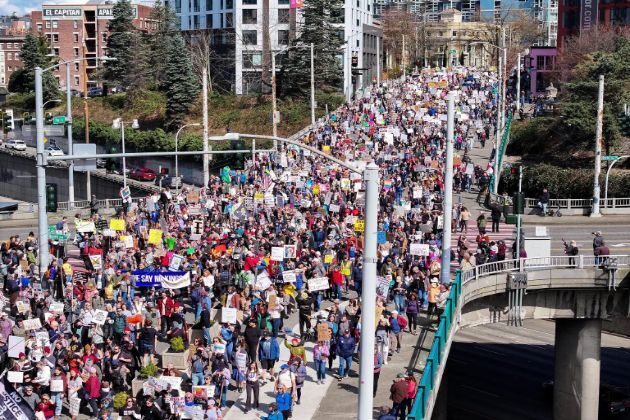
ST. PAUL, Minnesota: Protesting against the war in Iran and President Donald Trump's actions in Iran, people held No Kings rallies...
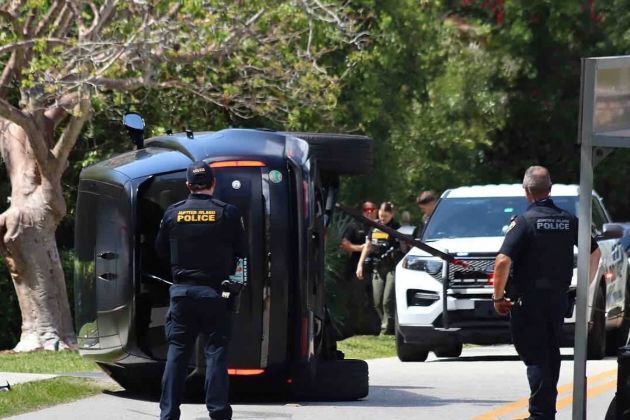
JUPITER ISLAND, Florida: Golfing legend Tiger Woods was arrested for driving under the influence on March 27 after the Land Rover he...
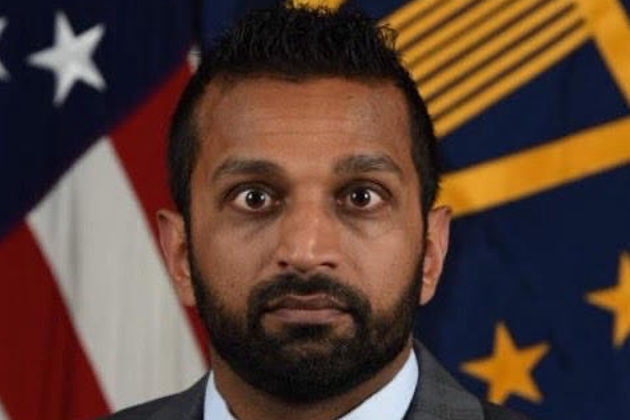
WASHINGTON, D.C.: A hacking group that supports Iran said on March 27 that it broke into an account linked to FBI Director Kash Patel....
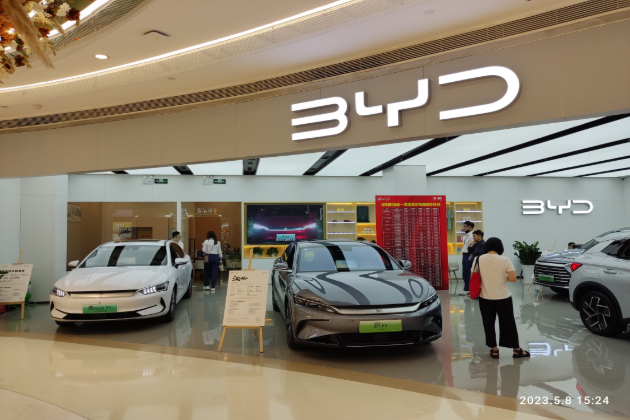
HONG KONG: Chinese automaker BYD said on March 27 that its annual sales rose to a record US$116 billion, outpacing Tesla's, but its...
Cuba, in the eyes of Donald Trump and (U.S. Secretary of State) Marco Rubio, was initially underestimated, said Luis Rene Fernandez...
(Photo credit: Hannah Foslien-Imagn Images) European teams are asking FIFA to increase prize money and to greater assist with costs...
YINCHUAN, April 1 (Xinhua) -- Under the spring sun in Ningxia Hui Autonomous Region, northwest China, a once-barren stretch of saline-alkali...
BEIJING, April 1 (Xinhua) -- China firmly opposes the United States' manipulation of the so-called general licenses to restrict China-Venezuela...
The final FIFA World Cup spots for the first 48-team edition were confirmed on Tuesday. Italy misses out again, while Robert Lewandowski...