Xinhua
28 Sep 2025, 14:45 GMT+10
The great change of recent decades has been the collective rise of the Global South. With China and other emerging countries as part of the Global South, a new balance of power has emerged. This group of emerging economies and developing nations accounts for more than 40 percent of global GDP and is transforming the world's political, economic and cultural landscapes. The Global South is poised to play a decisive role in redefining the new international order.
by Carlos Ominami
The trade war waged by the current U.S. administration has had direct and targeted effects, but also indirect and broader consequences. It is still too early to fully gauge the magnitude of the influence of the new tariffs imposed by Washington on countries and blocs, such as Canada, the EU, Japan, South Korea, India and Brazil. But the negative impact is already visible.
The greatest harm lies in the uncertainties created by decisions that violate international agreements. With these practices, the U.S. administration has strongly undermined the global trade system.
Still, the trade war is only one episode within a much larger crisis. The world is facing multiple and complex challenges of great depth. In this sense, it is no exaggeration to say that we are not merely living through a time of change, but through a change of era: poverty, inequality, climate change, the rise of illegal markets, and the renewed nuclear arms race all rank among the gravest threats.
No country or bloc can confront them alone. A more equitable and balanced international order with effective tools and institutions is needed to cope with them. To a large extent, today's global crisis is also a crisis of international order itself and of the inability to secure progressive global governance.
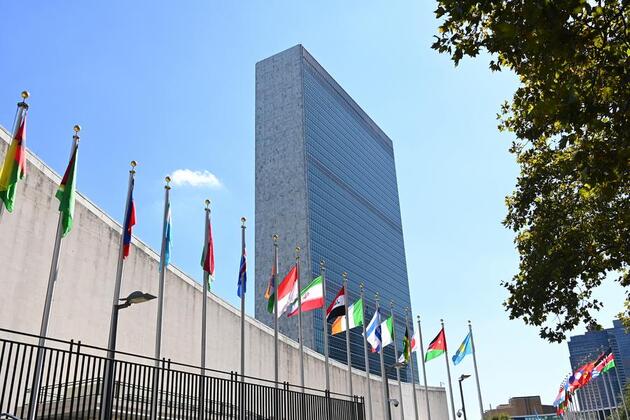
At the end of World War II, building a new order was seen as an urgent priority. The central task was to overcome the devastation of war and, above all, to create institutions that would prevent the recurrence of threats like those posed by Nazism. In 1945, the United Nations was founded in San Francisco, replacing the League of Nations, which had failed to prevent the outbreak of the war.
The seriousness of the current situation stems from the terminal crisis of the international governance system that emerged after World War II. This has not been a sudden rupture but a long process unfolding over decades. By the mid-1970s, the system had already been showing its inability to ensure governance capable of promoting even minimally equitable development across regions.
It was precisely in those years that the debate over the need for a more equitable and balancedinternational order gained traction. Despite UN resolutions in favor of a new international economic order, little progress was made. Relations between the Global North and the Global South remained highly asymmetrical, condemning poverty and underdevelopment for much of humanity.
What was then called the Third World saw important decolonization movements and revolutionary experiences, such as Cuba's in Latin America, which drew global attention. Nevertheless, the international system remained under the domination of Western powers led by the United States.
The great change of recent decades has been the collective rise of the Global South. With China and other emerging countries as part of the Global South, a new balance of power has emerged. This group of emerging economies and developing nations accounts for more than 40 percent of global GDP and is transforming the world's political, economic and cultural landscapes. The Global South is poised to play a decisive role in redefining the new international order.
If it can align around common goals, the Global South has the potential to become a pivotal global actor. Important steps in that direction include the creation of new coordination platforms such as the BRICS.
The U.S. administration's attempts to impose an order based on unilateral force are doomed to fail. The world cannot be organized on definitions that put narrow national interests ahead of the collective interests of humanity.
Editor's note: Carlos Ominami is a Chilean economist and director of the Chile 21 Foundation. He served as Chilean economy minister from 1990 to 1992 and as a senator from 1994 to 2010.
The views expressed in this article are those of the author and do not necessarily reflect those of Xinhua News Agency.
Get a daily dose of South America Times news through our daily email, its complimentary and keeps you fully up to date with world and business news as well.
Publish news of your business, community or sports group, personnel appointments, major event and more by submitting a news release to South America Times.
More InformationWASHINGTON, D.C.: Hillary Clinton criticized Robert F. Kennedy Jr. and the Trump administration this week, accusing them of undermining...
WASHINGTON, D.C.: A federal judge this week declined to reinstate eight former inspectors general who sued after being abruptly dismissed...
GOYANG, South Korea: The country's National Assembly is expected to pass the Tattooist Act, which would formally allow non-medical...
OSLO, Norway: When the Nobel Peace Prize is announced on October 10, experts say one name can safely be ruled out: U.S. President Donald...
WASHINGTON, D.C.: President Donald Trump's approval rating edged down in recent weeks as concerns grew over the U.S. economy and his...
OSLO, Norway: Norwegian police said this week they were investigating an explosion in central Oslo, where a second device was later...
SAO PAULO, Brazil: Brazil's health minister said this week he is not attending the United Nations General Assembly in New York after...
The great change of recent decades has been the collective rise of the Global South. With China and other emerging countries as part...
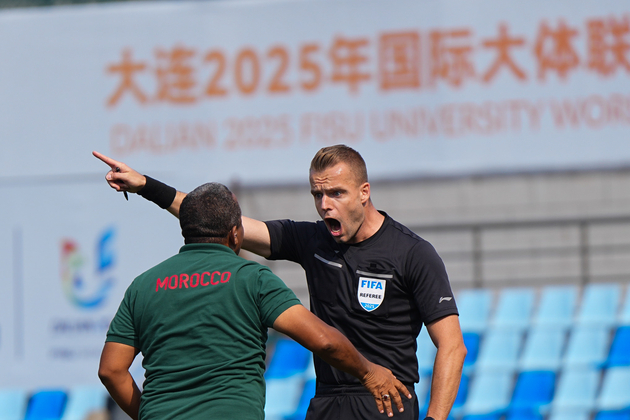
(250928) -- DALIAN, Sept. 28, 2025 (Xinhua) -- Referee Karel Roucek (R) asks Othman Bih, coach of Chouaib Doukkali University, to leave...
(250928) -- BEIJING, Sept. 28, 2025 (Xinhua) -- Sun Yingsha of China serves during the women's singles round of 64 match between Sun...
By Reena Bhardwaj New York [US], September 28 (ANI): Prime Minister Kamla Persad-Bissessar of Trinidad and Tobago was given a vibrant...
(Photo credit: David Gonzales-Imagn Images) Janni Thomsen and Aisha Solorzano each scored early first-half goals to propel the Utah...